Showing posts with label meditation. Show all posts

Monday, May 21, 2012

The Ahh Meditation, or Japa meditation is not only a great way to calm the mind and release stress, but also is a very effective way to manifest the life dreams and desires that are important to you.

I first came across this method for meditation through a seminar I attended hosted by Wayne Dyer, who was given the technique by spiritual teacher and mystic Baba Sri Siva.

What exactly is Japa meditation? Japa meditation is the repetition of the sound of "Ahh!" which is said to be the universal sound found in the various names of God from all spiritual traditions. For example: Allah, Krishna, God, Buddha, Ra. Each one of these names for God holds the sound of Ahh.

Think about how you use this sound in everyday life. When you find something pleasing you might express your feelings with a satisfying Ahhhhhhhhhhhhh!

According to Wayne Dyer's teacher, Sri Siva, when you do this meditation process for manifesting there is no lag time. Results happen immediately. Personally, I have had many experiences with this meditation technique where I found this to be true.

Here is Sri Siva's process on how to do Japa mediation for manifesting:

1. Think of something you really want or need to have happen. New job, divinely satisfying love life, superb health, more clients, more money etc. Be specific. If you want more clients for example,be specific in how many more clients want.

2. Imagine a column in the center of your body starting at your root chakra (approximately the spot between your anus and genitals -- the point where your body is touching a seat cushion when you are sitting) and at the top end of this imagined column is your 3rd eye chakra, which is between and slightly above your eyes.

3. Close your eyes and say the sound "Aaaaaaaaah" out loud while imagining the sound traveling upward from the root chakra to the 3rd eye chakra. It may seem strange at first, but try to extend the length of the sound Aaaaah for as long as comfortable. As you do this, turn your eyeballs upward slightly and imagine the intended goal in your mind's eye, picturing the goal like a movie, as if projected in front of you onto an imagined movie screen from your third eye chakra. It is important that this mind picture of your goal be as if you have already achieved what it is that you want. Using our previous example of getting more clients a great visualization would be seeing yourself smiling and shaking the new clients hands. If you have trouble visualizing, just allow yourself to 'feel' how you would feel if you were already doing, being, or having what it is that you want.

To see if this manifesting technique is right for you I recommend that you commit to do this once a day for two weeks merely as an experiment, to see for yourself if this is useful. You could do this for 15 to 20 minutes (with a timer), or say Aaaah 108 times with a mala (a string of 108 beads for counting), or just do the sound until you feel like you've done enough for each day. Better yet, get the cd or audiotape of Wayne Dyer's "Meditations for Manifesting" and follow along!


##

Copyright 2012, by Dardarji. All rights reserved. If you would like some additional information on self improvement, meditation, and spirituality go to http://www.transformationalspirituality.com/ to down load free ebooks, mp3's, and other resources. Like us on Facebook!

Wednesday, April 11, 2012

[Part two of Monday's insightful post on conscious awakening. Enjoy . . .]

Question: The yogis say that one must renounce this world and go off into secluded jungles if one wishes to find the truth.

Ramana Maharshi: The life of action need not be renounced. If you meditate for an hour or two every day you can then carry on with your duties. If you meditate in the right manner then the current of mind induced will continue to flow even in the midst of your work. It is as though there were two ways of expressing the same idea; the same line which you take in meditation will be expressed in your activities.

Question: What will be the result of doing that?

Ramana Maharshi: As you go on you will find that your attitude towards people, events and objects gradually changes. Your actions will tend to follow your meditations of their own accord.

Question: Then you do not agree with the yogis?

Ramana Maharshi: A man should surrender the personal selfishness which binds him to this world. Giving up the false self is the true renunciation.

Question: How is it possible to become selfless while leading a life of worldly activity?

Ramana Maharshi: There is no conflict between work and wisdom.

Question: Do you mean that one can continue all the old activities in one’s profession, for instance, and at the same time get enlightenment?

Ramana Maharshi: Why not? But in that case one will not think that it is the old personality which is doing the work, because ones consciousness will gradually become transferred until it is centered in that which is beyond the little self.

Question: If a person is engaged in work, there will be little time left for him to meditate.

Ramana Maharshi: Setting apart time for meditation is only for the merest spiritual novices. A man who is advancing will begin to enjoy the deeper beatitude whether he is at work or not. While his hands are in society, he keeps his head cool in solitude.

Question: Then you do not teach the way of yoga?

Ramana Maharshi:  The yogi tries to drive his mind to the goal, as a cowherd drives a bull with a stick, but on this path the seeker coaxes the bull by holding out a handful of grass.

Question: How is that done?

Ramana Maharshi: You have to ask yourself the Question `Who am I ?' This investigation will lead in the end to the discovery of something within you which is behind the mind. Solve that great problem and you will solve all other problems.

Question: Why is concentration ineffective?

Ramana Maharshi: To ask the mind to kill the mind is like making the thief the policeman. He will go with you and pretend to catch the thief, but nothing will be gained. So you must turn inward and see from where the mind rises and then it will cease to exist.

Question: In turning the mind inwards, are we not still employing the mind?

Ramana Maharshi: Of course we are employing the mind. It is well known and admitted that only with the help of the mind can the mind be killed. But instead of setting about saying there is a mind, and I want to kill it, you begin to seek the source of the mind, and you find the mind does not exist at all. The mind, turned outwards, results in thoughts and objects. Turned inwards, it becomes itself the Self.

Question: How can I tell if I am making progress with my inquiry?

Ramana Maharshi: The degree of the absence of thoughts is the measure of your progress towards Self-realization. But Self-realization itself does not admit of progress, it is ever the same. The Self remains always in realization. The obstacles are thoughts. Progress is measured by the degree of removal of the obstacles to understanding that the Self is always realized. So thoughts must be checked by seeking to whom they arise. So you go to their source, where they do not arise. 

Question: Doubts are always arising. Hence my Question.

Ramana Maharshi: A doubt arises and is cleared. Another arises and that is cleared, making way for yet another; and so it goes on. So there is no possibility of clearing away all doubts. See to whom the doubts arise. Go to their source and abide in it. Then they cease to arise. That is how doubts are to be cleared.

Source: from book "Be As You Are" by David Godman


##
Copyright 2012, by Dardarji. All rights reserved. If you would like some additional information on self improvement, meditation, and spirituality go to http://www.transformationalspirituality.com/ to down load free ebooks, mp3's, and other resources. Like us on Facebook!

Monday, April 9, 2012

I don't know about you, but I like to cut to the chase - get to the point of the matter as quickly as I can. Often however, when it comes to conscious awakening, you must let time and reflection be your guide. I won't leave you high and dry however – following are some excerpts on conscious awakening given by whom I consider to be one of my spiritual teachers, Ramana Maharashi.

In this excerpt you will find actual questions by spiritual seekers just like you and I who were seeking to find the somewhat illusive path to spiritual awakening. I have found these questions and answers particularly beneficial in my own spiritual understanding and practice. Enjoy . . .

Question: You say one can realize the Self by a search for it. What is the character of this search?

Ramana Maharshi: You are the mind or think that you are the mind. The mind is nothing but thoughts. Now behind every particular thought there is a general thought, which is the `I', that is yourself. Let us call this `I' the first thought. Stick to this `I'-thought and Question it to find out what it is. When this Question takes strong hold on you, you cannot think of other thoughts.

Question: When I do this and cling to myself, that is, the `I'-thought, other thoughts come and go, but I say to myself `Who am I ?' and there is no answer forthcoming. To be in this condition is the practice. Is it so?

Ramana Maharshi: This is a mistake that people often make. What happens when you make a serious quest for the Self is that the `I'-thought disappears and something else from the depths takes hold of you and that is not the `I' which commenced the quest.

Question: What is this something else?

Ramana Maharshi: That is the real Self, the import of `I'. It is not the ego. It is the Supreme Being itself.

Question: But you have often said that one must reject other thoughts when one begins the quest but the thoughts are endless. If one thought is rejected, another comes and there seems to be no end at all.

Ramana Maharshi: I do not say that you must go on rejecting thoughts. Cling to yourself, that is, to the `I'-thought. When your interest keeps you to that single idea, other thoughts will automatically get rejected and they will vanish.

Question: And so rejection of thoughts is not necessary?

Ramana Maharshi: No. It may be necessary for a time or for some. You fancy that there is no end if one goes on rejecting every thought when it rises. It is not true, there is an end. If you are vigilant and make a stern effort to reject every thought when it rises you will soon find that you are going deeper and deeper into your own inner self. At that level it is not necessary to make an effort to reject thoughts.

Question: Then it is possible to be without effort, without strain.

Ramana Maharshi: Not only that, it is impossible for you to make an effort beyond a certain extent.

Question: I want to be further enlightened. Should I try to make no effort at all?

Ramana Maharshi: Here it is impossible for you to be without effort. When you go deeper, it is impossible for you to make any effort.  If the mind becomes introverted through inquiry into the source of aham-vritti, the vasanas become extinct. The light of the Self falls on the vasanas and produces the phenomenon of reflection we call the mind. Thus, when the vasanas become extinct the mind also disappears, being absorbed into the light of the one reality, the Heart. This is the sum and substance of all that an aspirant needs to know. What is imperatively required of him is an earnest and one pointed inquiry into the source of the aham-vritti.

Question: How should a beginner start this practice?

Ramana Maharshi: The mind will subside only by means of the inquiry `Who am I?' The thought 'Who am I?', destroying all other thoughts, will itself finally be destroyed like the stick used for stirring the funeral pyre. If other thoughts rise one should, without attempting to complete them, inquire `To whom did they rise?' What does it matter however many thoughts rise? At the very moment that each thought rises, if one vigilantly inquires `To whom did this rise?', it will be known `To me'. If one then inquires `Who am I?', the mind will turn back to its source [the Self] and the thought which had risen will also subside. By repeatedly practicing thus, the power of the mind to abide in its source increases.

Although tendencies towards sense-objects [vishaya vasanas], which have been recurring down the ages, rise in countless numbers like the waves of the ocean, they will all perish as meditation on one?s nature becomes more and more intense. Without giving room even to the doubting thought, `Is it possible to destroy all these tendencies [vasanas] and to remain as Self alone?', one should persistently cling fast to self-attention.

As long as there are tendencies towards sense-objects in the mind, the inquiry `Who am I ?' is necessary. As and when thoughts rise, one should annihilate all of them through inquiry then and there in their very place of origin. Not attending to what-is-other [anya] is non-attachment [vairagya] or desirelessness [nirasa]. Not leaving Self is knowledge [jnana]. In truth, these two [desirelessness and knowledge] are one and the same. Just as a pearl-diver, tying a stone to his waist, dives into the sea and takes the pearl lying at the bottom, so everyone, diving deep within himself with non-attachment, can attain the pearl of Self. If one resorts uninterruptedly to remembrance of one?s real nature [swarupasmarana] until one attains Self, that alone will be sufficient.

Inquiring `Who am I that is in bondage?' and knowing ones real nature [swarupa] alone is liberation. Always keeping the mind fixed in Self alone is called 'self-inquiry', whereas meditation [dhyana] is thinking oneself to be the absolute [Brahman], which is existence-consciousness-bliss [sat-chit-ananda].

Source: From book "Be As You Are", compiled by David Goodman


##
Copyright 2012, by Dardarji. All rights reserved. If you would like some additional information on self improvement, meditation, and spirituality go to http://www.transformationalspirituality.com/ to down load free ebooks, mp3's, and other resources. Like us on Facebook!

Monday, March 19, 2012

How to find inner peace seems to be one of the biggest trends of the 21st century. Learning to seek out enlightenment and inner peace seems to be the buzz trend. People are buying up books everywhere and running from guru to teacher to try to find that inner peace they so desperately crave. So then, who really has inner peace and how did they find it? I dont know about you, but when I first began my quest for inner peace I felt a bit lost when it came to uncovering the Truth.

One surefire method for determining if you are on the right path on your way to discovering inner peace is to simply ask yourself the question, "Am I more at peace than I was a year ago or six months ago?" If you feel that you are finding more peacefulness as you progress on your path, then you know it must be working.

If you aren't sure if you have been more peaceful, or if you think that maybe it isn't working then I suggest that you learn to to sit still a little more each day. Sitting still each day, and closing your eyes as you sit, can be a great way to calm your mind and emotions so that peacefulness eventually becomes more normal for you. Here is a bit of wisdom for you to ponder on your path to peacefulness -inner peace only comes from one place and that's the inner part of you! If you find that you aren't feeling peaceful, it's time to look deeper within yourself.

Many times, when people decide to start a daily meditation program, they discover that their thoughts and emotions are running wild inside of them and they feel almost instantly discouraged. Common statements from beginners are "Am I doing it right?", "How should I sit?" and "Should I concentrate on my breathing?"

If you find yourself thinking the same thoughts, relax. There is no "right" way to sit still or "correct" thing to concentrate on when you meditate. You're goal is to simply sit still with your eyes closed and relax. Don't fall asleep but don't worry so much about whether it is "right" or "wrong". If you are sitting there with your eyes closed then it is right! That's all there is to it.

I think that, especially for beginning meditators, that the hard part comes when you start judging and analyzing all of the thoughs and emotions which arise. You then feel that this causes alot of frustration with what you are trying to do. But what are you trying to do? Nothing! So why then did you get so frustrated about nothing?

The main issue for novice meditators is that they think there is a special formula for meditation and a way of doing it that will make them an "expert". The truth is that there is no correct way of doing it and there is no set formula. Everything you do will be correct. Just sit there and, by doing it each day for a certain amount of time, this will eventually result in more calmness of your mental processes and an equilibrium of your emotions. The beginning, however, as you are teaching your mind and emotions to to not run rampant, can sometimes be the toughest time.

I like to think of it this way - did you ever try to teach a dog to sit still? You can usually teach him to sit but getting him to 'stay' is a bit tougher. This is oftent the same problem for people. People know how to sit but they never learn how to stay. If you can teach yourself to both sit and stay you will be among the very few people in the world who have learned a very valuable trick. For dogs, it takes some extra 'Scooby snacks' to get them to do it.

For human beings it sometimes requires a timer, a calendar and the fun game of checking off the days of the week as they complete their task of staying for 30 minutes or more. Some humans get to be experts at this trick and can sit still for over an hour and for several different times a day. These humans are sort of like the dogs you have seen on television who can perform in front of a panel of judges and can sit and stay for long periods of time. Their masters always love them a lot and they always win the contests they enter.

As funny as this comparison may seem, it actually applies quite well. If you learn to sit for longer periods of time without having to move around in your chair and without your mind doing cartwheels every moment, you will eventually start to win more things in life. The Master behind your thoughts and emotions will eventually come forward and reward you with a lot of great 'Scooby snacks'. Finding inner peace can be as easy as training a dog but you have to be a good dog who really wants to please his master. Now get out there and "sit" and, next time you do it, make sure and "stay" too!


##
Copyright 2012, by Dardarji. All rights reserved. If you would like some additional information on self improvement, meditation, and spirituality go to http://www.transformationalspirituality.com/ to down load free ebooks, mp3's, and other resources. Like us on Facebook!

Sunday, March 4, 2012

Have you ever wondered how to meditate? There is no one set technique for participating in a meditation practice, no necessary tools, nor is there a prescribed set time for a meditation practice. Another great thing about meditation practice is that it can be performed anywhere, sitting down, standing up, or laying down.

So what is the best way for a beginner to perform meditation? In my own daily meditation practice I have found that the easiest and most practiced way to achieve a calm, meditative state is to focus on your breath.

The Buddha gave the following discourse concerning becoming aware of one’s breath:

“What is the way to develop and practice continuously the method of full awareness breathing so that the practice will be rewarding and offer great benefit?

“It is like this, the practitioner goes into the forest or to the foot of a tree, or to any deserted place, and sits stably in the cross-legged position, holding one’s body quite straight. Breathing in, one knows that one is breathing in; and breathing out, one knows that one is breathing out.

“. . . The full awareness of breathing, if developed and practiced continuously according to these instructions, will be rewarding and of great benefit.”

An Easy Meditation Practice For Beginners
  1. Sit in a chair, or on the floor either in lotus or half-lotus position, keeping your spine erect.
  2. Breathe in two to three times, inhaling through your nose, and exhaling through your mouth. As you exhale, physically relax your muscles in your body while still maintaining an erect posture. Feel your neck and face, and brow muscles relax.
  3. Close your eyes. Breathe in slowly and deeply through your nose, drawing the air down into the pit of your stomach. This will cause your lower abdomen to push out slightly. Notice the air as it enters you nose. Observe how it feels as it fills your lungs.
  4. Next, exhale slowly through your mouth. Pay attention to the air exiting your mouth. Notice how it feels as it exits your lungs and mouth. Just observe it.
  5. If a thought arises such as “Did I pay my electric phone bill?”, or “I’m hungry”, don’t ignore the thought, just notice it and return to your breathing.
  6. Continue this process as long as you’d like to, preferably 15 to 20 minutes.
The greatest challenge in the above exercise is what I call “soft” focus on the breath. Don’t try too hard to notice or analyze your breathing. Just pay attention to it. Most important of all – relax!

Quite often when I am teaching meditation it becomes readily apparent who is trying to “force” their attention on their breath. Their shoulders tense and rise with each breath, their jaw may clench, and a lot times their eyebrows wrinkle together. The key is to allow yourself to completely relax and to just allow the breath to come and go while observing it.

Learning how to meditate is a simple as stopping your daily routine, relaxing your body, and pausing a few minutes to focus on your breathing. Practice your breathing meditation on a daily basis, and before you know it, your mind and body will be hooked!


##

Copyright 2012, by Dardarji. All rights reserved. If you would like some additional information on self improvement, meditation, and spirituality go to http://www.transformationalspirituality.com/ to down load free ebooks, mp3's, and other resources. Like us on Facebook!

Monday, February 6, 2012

In Zen meditation, "Monkey Mind" is a term used to describe the experience of thoughts as they jump to and fro, like a monkey swinging from branch to branch in a tree.

In meditation practice, especially when you are first starting out, your mind has the tendency to jump from thought to thought, analyzing this and that, worrying about what will happen, replaying who said what and how you reacted, etc.

The first time I heard the expression, "monkey mind," in regard to meditation, I laughed to myself. As a child, my favorite thing to do at the zoo was to watch the antics of the monkeys. I could watch them play, and be entertained for hours and never get bored. I enjoyed watching as they engaged in one activity to another, allowing themselves to be highly stimulated by the environment around them.

One of the mind's favorite occupations is to play and be entertained with random thought. Modern psychology calls this sort of mind activity concept looping, in which the thoughts loop around from mental concept to mental concept without ceasing.

Meditation is a very effective way to tame the endless chatter and activity of the monkey mind. So what are some ways that you can tame the monkey of your mind so that you can fully enjoy the benefits of meditation?

1. Notice the thought without attaching to it. Taming monkey of your mind is simply the act of noticing a thought without attaching to it. When you are 'attached' to a thought it means that you make it personal, adding your own spin on it with your feelings, beliefs, and concepts. The ego mind loves to do this as much as a monkey loves to eat bananas!

2. After observing the thought let it go. Taming the monkey of your mind is the practice of observing a new thought without letting it take hold of you, as well as the habit of choosing to release a thought and to let it go, instead of letting the ego mind run with it.

When I first began meditation I found this a bit difficult to do because my mind was used to having its own way with me. When I began to consciously control my mind, my mind rebelled. But with continued practice I realized that I was not my mind, and that I could choose to not act or react on every thought that just popped into my head. This realization empowered me, and I slowly began to be able let the chatter of the mind cease, and to experience the deep inner peace that comes with a regular practice of meditation.

Meditation allows you to harness the power of the mind, center it, and focus on one subject at a time. If you take the time for a daily meditation practice, your decision making process will be much more controlled and clear. The end result will be to look at the monkey in your with much more compassion, respect, appreciation, and a bit of humor.

Wednesday, February 1, 2012

You have the ability to create your own dominant mental programming. A positive mindset is a powerful mindset. It is the ability to consciously change your environment, economic status, circle of friends, and attitude. and it is completely under your control.

Your mind absorbs and siphons raw data just like a computer. Within your mind exists a unique civilization unto itself consisting of all your beliefs and attitudes which decide how you are going to show up in the world. Many people feel like they have no control of their own mind, because this inner society of the mind has become negative. This negativity is a result of perceived past experiences, being in a less than harmonious home, work, economic, or social, negative environment, or being under the influence of nonconstructive ideas.

Similar to a computer virus, you need to learn to identify negative thought patterns quickly, to avoid letting them spread throughout your mind by saturating your thoughts. You can also pass this virus of negative thinking and energy onto people around you, like "weeds in a field."

Much like a farmer, you cultivate too. The energy in your mind is the crop, and it is up to you, whether you sow weeds or wheat. If you have a farm and let a field take care of itself by default; you will be lucky if you are able to reap any kind of a crop from it at all.

This is the same with the energy within your mind.

You have to option to pick quality seeds to sow into your mind in the form of inspiring and motivating, books, eBooks, DVD's, audio programs from CD's and mp3's, lectures, courses, workshops, and seminars. Continued personal and spiritual development results into only in a positive mindset, but also in a positive outlook on life.

One thing you must remember, however, is that your work is not finished with just one book, or personal development workshop, because you must still reinforce the lessons. This comes from repeated listening, learning, and applying what you learn. Repetition is the mother of skill. This might be compared to fertilizing, watering, and "weeding the mind." You need to work at it continually or the weeds will take root and grow back.

This is where meditation can come into play. The practice of meditation teaches you controlled focus on an object, thought, or task without judgment. This process makes it possible to look at all situations objectively to immediately take stock of the fertile soil of the mind.

With meditation you can find solutions, turn negative situations into positive and productive learning experiences, and create your own positive mindset. As a result of you will not only develop an indomitable spirit, but also make new friends, reach your goals quicker, and handle problems more easily.

 ##

If you would like some additional information on self improvement, meditation, and spirituality go to http://www.transformationalspirituality.com/ to down load free ebooks, mp3's, and other resources.  Like us on Facebook!
Thursday, January 5, 2012

I live in Southern California so when I came across the "traffic jam meditation" I not only chuckled, but I also felt a sense of encouragement. Traffic jams are a very easy way to loose your peace and composure.

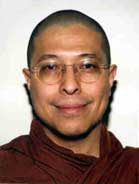
The following Traffic Jam Meditation is an excerpt from the ebook Hello-With Love, and Other Meditations, by Venerable Vissuddhacara. His insights, and the meditation are truly precious.

"When you are caught in a traffic jam, instead of getting uptight and tense, apply mindfulness. Be aware of your mind and body. Observe the sensations in the body. Notice your breath - both in and out. Be aware of your sitting posture, feel the contact between buttocks and seat, and between back and back-rest. Sensations of warmth and pressure in those areas of contact can be felt and noted.

Feel your hands on your steering wheel. Observe your mind, too, and notice its tense, edgy, impatient, agitated, disturbed, or whatever state. You'll be surprised that such simple awareness can produce a calming effect. You'll feel a little bit more relax, a little less tense. Then, if you maintain your mindfulness, observing say your in-breath and out-breath, you'll loosen up further and will relax even more.

Then you can also radiate loving-kindness which you must remember is something you can practise any time anywhere. So here in the traffic jam, you can radiate thoughts of goodwill to all around you. You can think any wholesome thoughts you like such as, "May all beings be happy. May they be peaceful. May they be healthy. May they be wise, enlightened, free from suffering, live in peace and harmony, free from such traffic jams, not get angry, and so on."

You can keep repeating and radiating such thoughts to all those people who are caught in the traffic jam, to all those people around you out there, and to the passengers that may be in your car. And to anybody else you may think of, such as your loved ones or friends. Or just to all beings at large throughout the whole universe. And, of course, you can also direct those thoughts to yourself, wishing the same for yourself."

Traffic Jam Meditation

"Keeping cool and radiating love:
May all those who are caught,
like me, in this jam be happy.
May they keep cool and not get angry.
May all beings be happy and live in peace & harmony."

##

If you would like some additional information on self improvement, meditation, and spirituality go to http://www.transformationalspirituality.com/ 
to down load free ebooks, mp3's, and other resources.

Search

Bookmark Us

Delicious Digg Facebook Favorites More Stumbleupon Twitter